

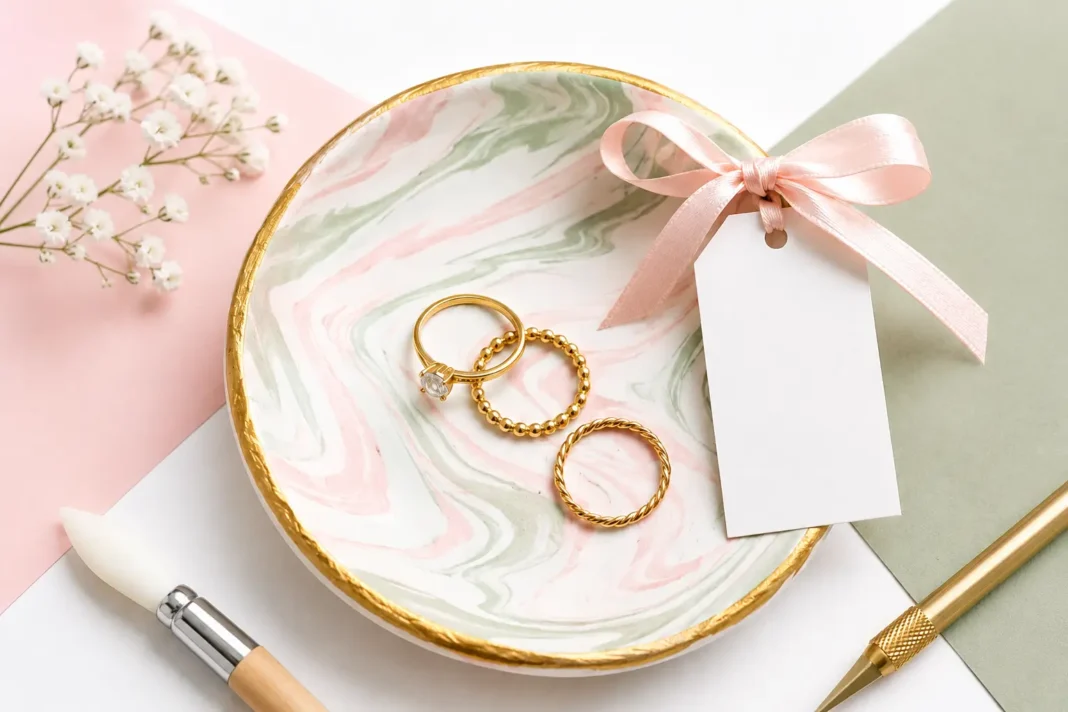
A DIY marbled clay ring dish is one of those handmade gifts that looks much fancier than it actually is. I love that kind of craft. It feels thoughtful and pretty, but it does not require a kiln, a studio, or a craft drawer that looks like a small art store exploded.
This little dish is made with air-dry clay in soft colors, rolled together to create a gentle marbled look, then shaped over a bowl and finished with a thin gold rim. It works beautifully as a handmade ring dish, jewelry dish, tiny trinket dish, or sweet gift for Mother’s Day, birthdays, Valentine’s Day, teacher gifts, or friendship gifts.
I also love that every dish turns out a little different. The clay does its own thing once the colors twist together, and that is part of the charm.
Why You’ll Love This DIY Marbled Clay Ring Dish
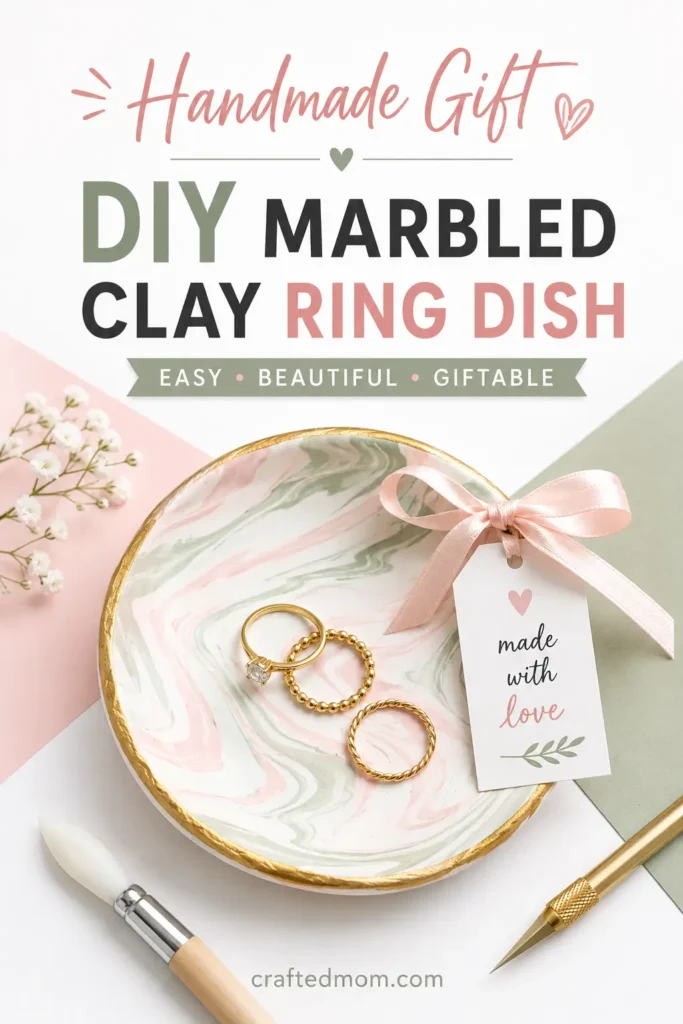
This craft feels soft, pretty, and personal without being too complicated. The marbled pattern makes it look special, but the steps are simple enough for beginners.
You’ll love this handmade ring dish because it:
- uses simple supplies
- makes a useful handmade gift
- looks pretty on a nightstand or vanity
- can hold rings, earrings, coins, or tiny keepsakes
- is easy to personalize with favorite colors
- has a sweet polished look with the gold rim
- works well for birthdays, Mother’s Day, or Valentine’s Day
I also like that this is a slower craft. You shape it one day, let it dry, and finish it later. That makes it nice for a weekend project when you do not want everything finished in five rushed minutes.
Supplies You’ll Need
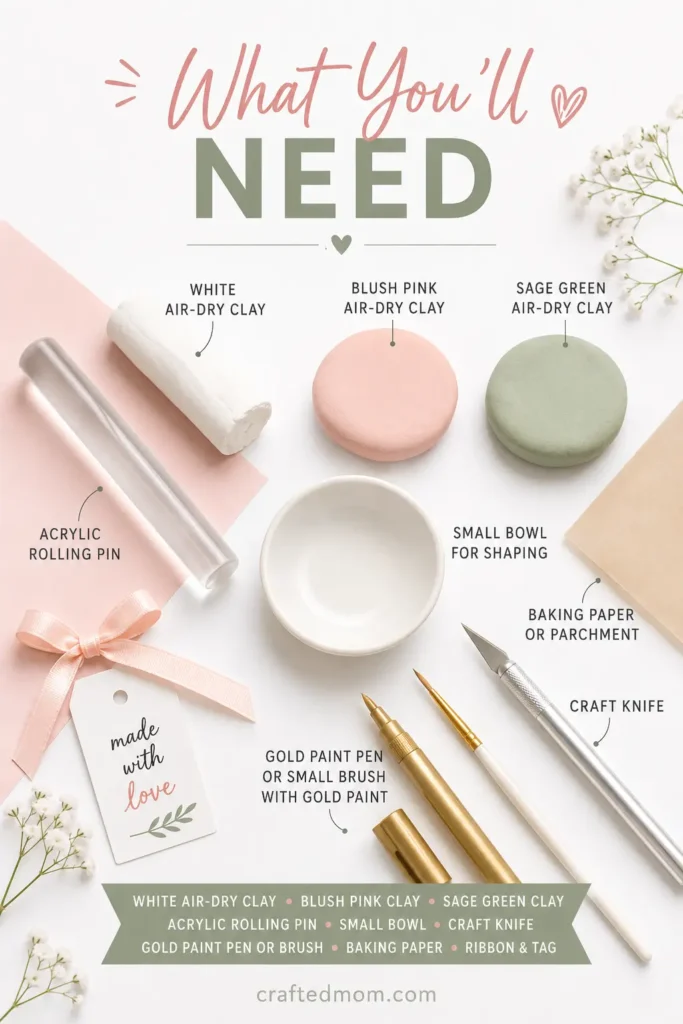
For this DIY marbled clay ring dish, gather your supplies before you start. Clay can dry out a little while you work, so it helps to have everything ready.
You’ll need:
- White air-dry clay
- Blush pink air-dry clay
- Sage green air-dry clay
- Acrylic rolling pin
- Small bowl for shaping
- Baking paper or parchment paper
- Craft knife
- Gold paint pen or small brush with gold paint
- Ribbon and gift tag
Acrylic rolling pins are nice because clay does not stick to them as badly, but a smooth cup or glass can work too. I would not use a favorite wooden rolling pin from the kitchen unless you are okay keeping it for crafts afterward.
For younger crafters, I would handle the craft knife part myself or use a dull clay tool instead. The pretty part of this project is the marbling, not anyone trying to prove they can cut clay perfectly.
How to Make a DIY Marbled Clay Ring Dish
This ring dish comes together in eight simple steps. You condition the clay, roll the colors, create the marble, flatten it into a slab, cut the shape, form the dish, let it dry, and paint the rim.
Step 1: Condition the Clay
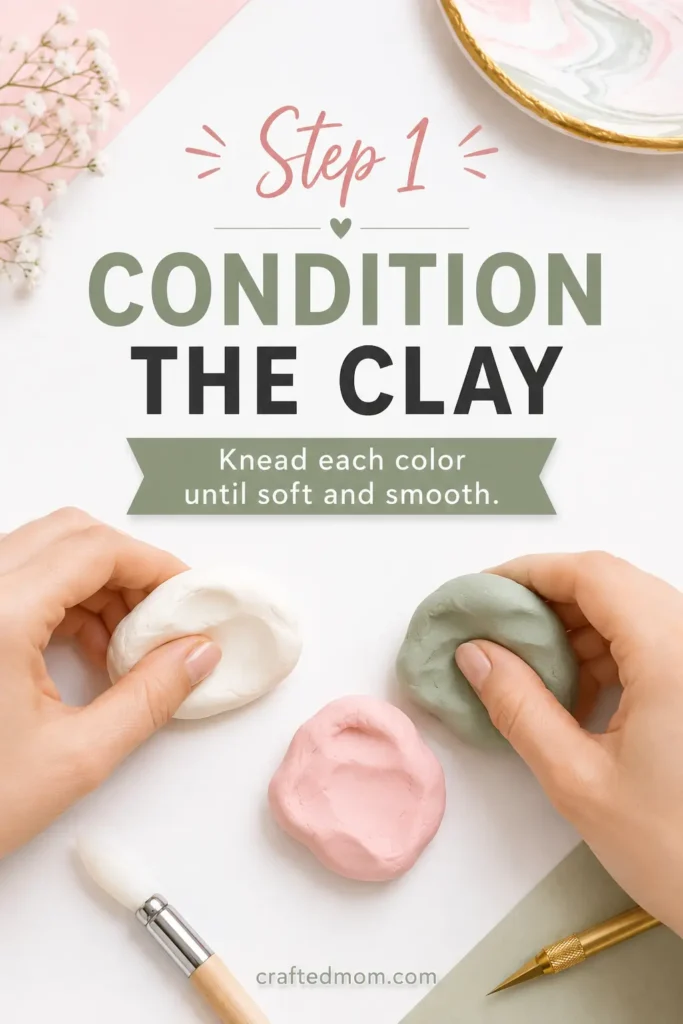
Start by kneading each color of air-dry clay until it feels soft and smooth. You are using white, blush pink, and sage green clay for this soft marbled look.
This step matters more than it seems. If the clay is too stiff, it can crack while you roll it. If it is soft and smooth, it blends and shapes much more easily.
I like to work each color separately at first. Press it, fold it, and gently knead it in your hands until it warms up a bit and feels easier to shape.
Keep the colors separate at this stage. The marbling comes later, and you do not want to accidentally turn everything into one muddy color before the craft even starts.
Step 2: Roll the Colors
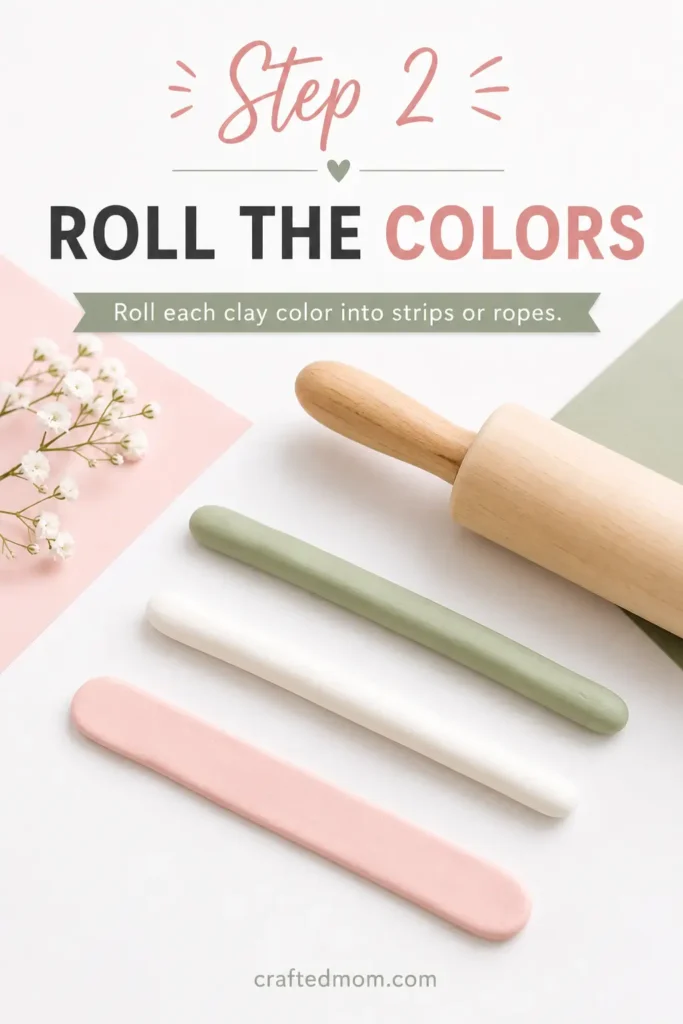
Next, roll each clay color into strips or ropes. Try to make them close in thickness so they blend evenly.
You do not need perfect ropes here. Mine are usually a little lumpy, especially at the ends, and it still works fine. The rolling step is really just to help the colors sit side by side before you twist them together.
Lay the white, blush pink, and sage green clay ropes on your parchment paper. White should be the main color if you want a soft, clean marbled look. The pink and green are accent colors, so a little goes a long way.
This is one of those crafts where less color can actually look prettier. Too much pink and green can take over the soft marble effect.
Step 3: Create the Marble
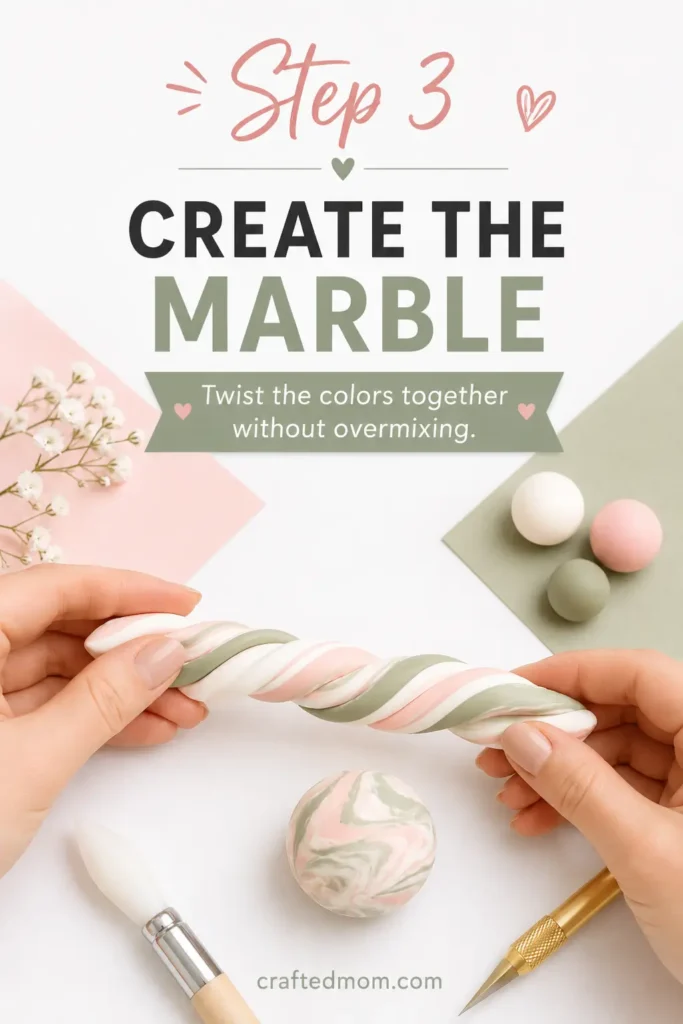
Now twist the clay colors together gently. This is the fun part, but it is also where I have to remind myself not to overdo it.
Twist the ropes a few times, fold them together, and twist again until you see soft streaks of blush pink and sage green running through the white clay.
Do not knead everything into one solid color. The goal is to create lines and swirls, not fully mix the clay.
I like to stop while the colors still look a little dramatic because once you flatten the slab, the marbling spreads out more. If it already looks fully blended before rolling, it may look too muted later.
This is also the part where every dish becomes different. Some will have more pink, some will show more green, and some will have little white spaces. That is exactly what makes each handmade jewelry dish special.
Step 4: Flatten the Slab
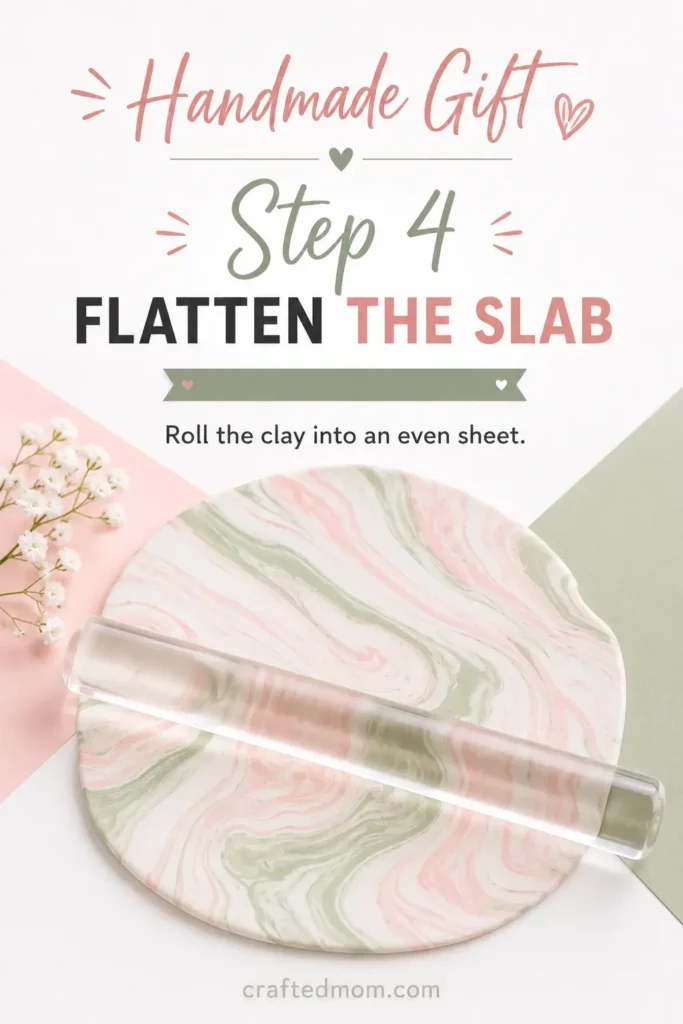
Roll the marbled clay into an even sheet using your acrylic rolling pin. Place the clay on parchment paper first so it does not stick to your table.
Try to keep the slab thick enough that it will hold its shape after drying. If it is too thin, the dish may curl, crack, or feel fragile.
I would aim for a thickness that feels sturdy but still easy to shape. Think of it like a thick cookie, not a paper-thin cracker.
Roll gently and evenly. Turn the clay slightly if needed so you are not always rolling in the same direction. This helps spread the marble pattern and keeps the slab more balanced.
This is also a good time to look at the marbling and decide which side you like best. The side facing up will become the inside of your dish, so choose the prettiest swirl pattern.
Step 5: Cut the Shape
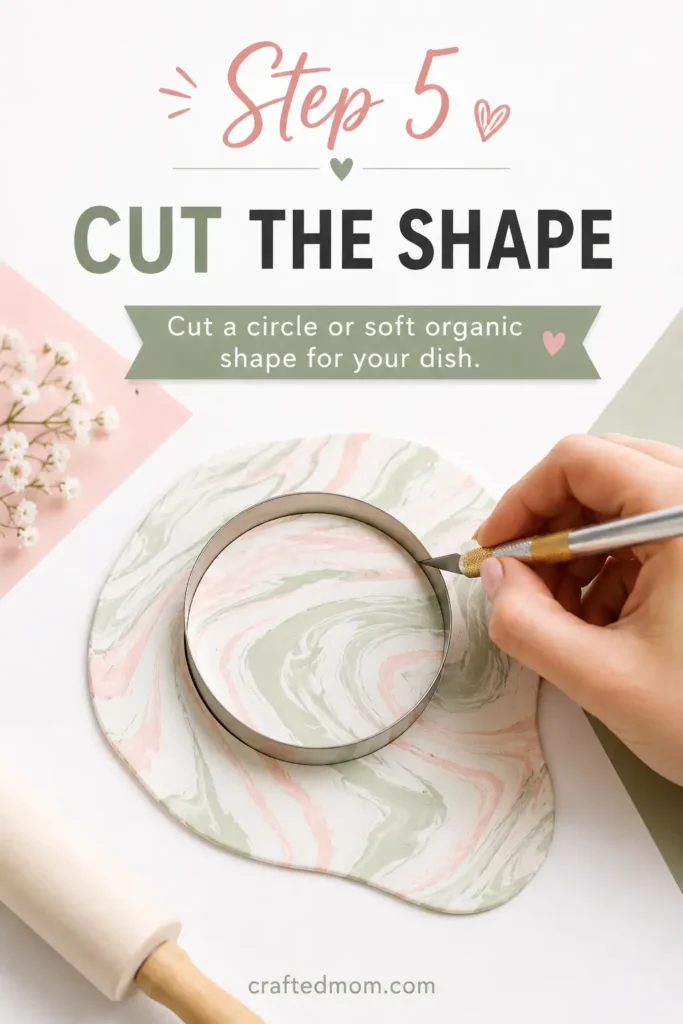
Use a craft knife or clay tool to cut your dish shape. You can make a circle, oval, soft organic shape, or even a slightly imperfect rounded shape.
The design shown uses a soft rounded dish, which I really like because it feels handmade and modern. You do not have to make it perfectly symmetrical.
You can use a bowl, large cookie cutter, or round object as a guide. Press it lightly onto the clay, then cut around it.
If you want a more relaxed handmade look, freehand the shape. That is usually what I would do because I would rather call it “organic” than spend ten minutes trying to make a perfect circle.
After cutting, gently lift away the extra clay from the edges. Save the scraps in case you want to make a mini dish or practice piece.
Step 6: Form the Dish
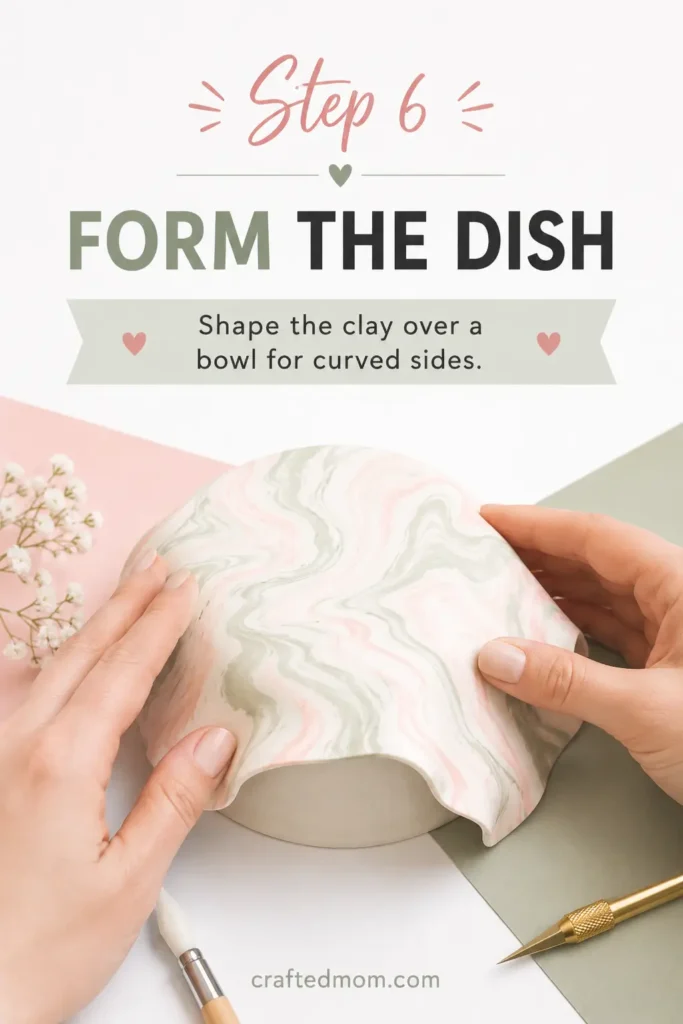
Place the clay shape over a small bowl to form the curved sides. Press gently so the clay takes on a shallow dish shape.
Do not push too hard. You only need a soft curve, just enough for the finished dish to hold rings or small jewelry pieces.
Make sure the clay is centered over the bowl so the sides curve evenly. If one side looks too low or stretched, lift it gently and adjust it.
This step always feels a little delicate, but air-dry clay is usually forgiving while it is still fresh. Move slowly, support the clay with your hands, and smooth any edges that look rough.
You can also soften the rim with your fingertips. A tiny bit of water on your finger can help smooth cracks, but use only a little. Too much water can make the clay sticky and weak.
Step 7: Let It Dry
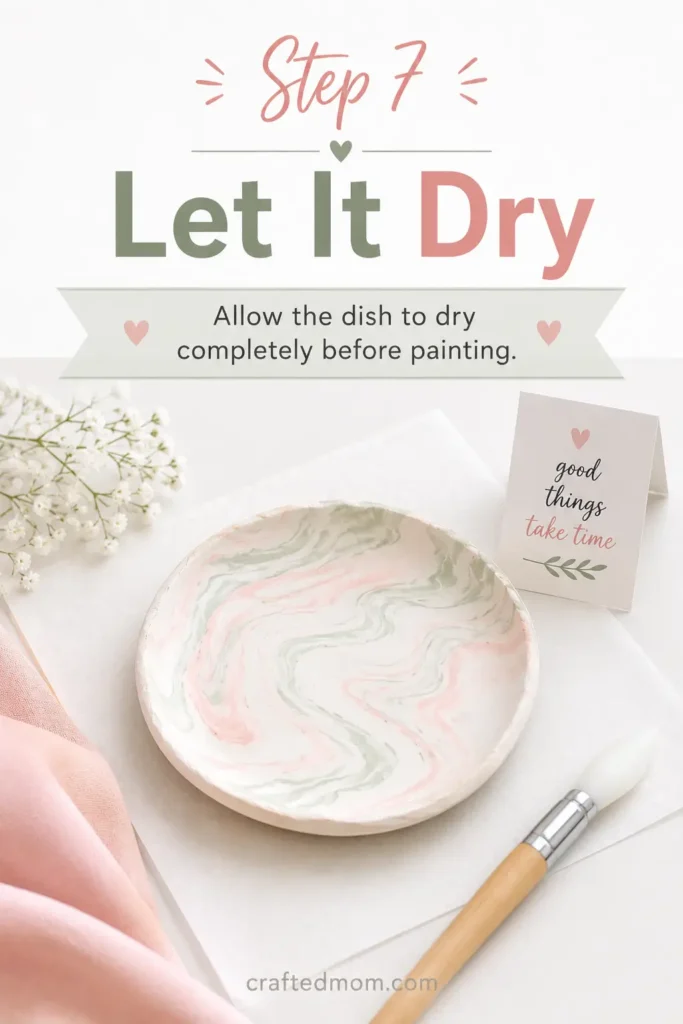
Now let the dish dry completely before painting. This is the part where patience earns its keep.
Air-dry clay usually needs several hours or overnight, but drying time depends on the thickness of your dish and the brand of clay. I prefer leaving clay projects alone longer than I think they need because painting too early can trap moisture.
Keep the dish on the bowl while it dries so it holds its curved shape. Place it somewhere safe where it will not get bumped, poked, or inspected every ten minutes by curious little hands.
Once it feels dry, gently remove it from the bowl. Check the edges and underside. If anything still feels cool, soft, or damp, give it more time.
This is one of those moments where rushing can ruin the whole project, and nobody wants that after making such pretty marble.
Step 8: Paint the Rim
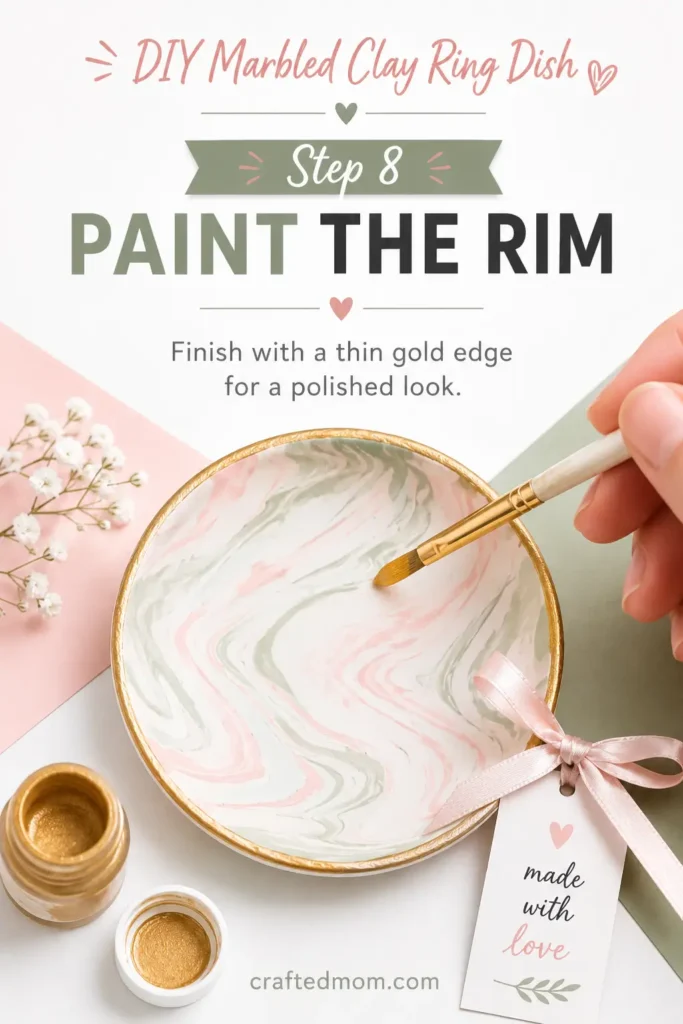
When the dish is fully dry, finish it with a thin gold rim. You can use a gold paint pen or a small brush with gold paint.
Go slowly around the edge. The gold does not need to be thick. A thin line is enough to make the dish look polished and gift-ready.
I like the gold rim because it makes the marbled clay ring dish feel more like something from a little boutique. It also ties in beautifully with a ribbon and gift tag.
Let the paint dry completely before handling or wrapping the dish. If you want extra protection, you can add a clear sealant after the paint dries. That helps protect the surface, especially if the dish will be used often.
Easy Clay Craft Tips
A few small choices can make this beginner clay craft easier and prettier.
- Use white clay as the main base color.
- Add only small amounts of blush pink and sage green.
- Do not overmix the clay colors.
- Roll the slab evenly.
- Keep the dish slightly thick for strength.
- Let it dry fully before painting.
- Use a light hand with the gold rim.
- Wrap it nicely if giving it as a gift.
The biggest tip is to stop marbling before you think you are done. The colors keep blending as you roll and shape the clay.
Pretty Variations to Try
Once you make one DIY marbled clay ring dish, it is very easy to start imagining more color combinations.
You could try:
- pink and white marbled ring dish
- sage green and cream jewelry dish
- lavender and white trinket dish
- blue and white clay ring dish
- beige and white neutral dish
- heart-shaped marbled clay dish
- gold-edged mini earring dish
- personalized dish with initials
For a Mother’s Day gift, I would use soft pink and white with a tiny gold heart. For a teacher gift, sage green and white feels calm and pretty. For a friend, I would choose colors that match her room or jewelry style.
How to Gift This Handmade Ring Dish
This handmade gift idea is already lovely on its own, but presentation makes it feel even more thoughtful.
You can place the finished dish in a small gift box with tissue paper, tie it with ribbon, and add a tag. You can also tuck a small pair of earrings or a bracelet inside the dish.
This marbled clay ring dish pairs beautifully with a Handmade Gift DIY Beaded Bracelet Gift because the bracelet can sit right inside the dish. It also goes well with a Handmade Gift DIY Heart Ring Dish if you want to create a small handmade jewelry storage set.
This gift works well for:
- Mother’s Day
- birthdays
- Valentine’s Day
- friendship gifts
- teacher gifts
- handmade holiday gifts
- bridesmaid gifts
- small thank-you presents
It is one of those gifts that feels personal without being too over the top.
What I’d Do Differently Next Time
The first time I make a clay dish, I usually learn something small.
For this one, I would keep the clay a little thicker than I first think. Thin clay looks delicate, but it can dry fragile. I would also test the gold paint pen on a scrap piece first because some pens come out thicker than expected.
I would also make two dishes at once. Since the supplies are already out, it is not much extra work, and the second one usually turns out even better.
Final Thoughts
This handmade gift DIY marbled clay ring dish is simple, pretty, and genuinely useful. I love that it looks elegant, but still has that warm handmade feel that makes a gift more personal.
The soft white, blush pink, and sage green marbling gives it a gentle look, while the gold rim makes the whole piece feel finished. It is perfect for holding rings, earrings, tiny keepsakes, coins, or little desk items.
And honestly, even if the shape is not perfectly round, that is part of the charm. Handmade gifts do not need to look factory-made. They just need to feel thoughtful.
If you enjoyed making this clay ring dish, you may also like this Handmade Gift DIY Heart Ring Dish for another sweet jewelry holder idea, or this Handmade Gift DIY Beaded Bracelet Gift if you want a simple handmade accessory to pair with it.
Frequently Asked Questions
Is this DIY marbled clay ring dish beginner-friendly?
Yes, this is a beginner-friendly clay craft because it uses simple rolling, twisting, shaping, and painting steps.
What can I use this marbled clay ring dish for?
You can use it for rings, earrings, small jewelry, coins, tiny keepsakes, hair pins, or little desk items.
What kind of clay should I use?
Air-dry clay is easiest for beginners. White air-dry clay works well as the main color, with small amounts of colored clay added for marbling.
Can kids help make this handmade ring dish?
Older kids can help knead, roll, and shape the clay with adult supervision. An adult should handle the craft knife, gold paint, and any sealant.
